
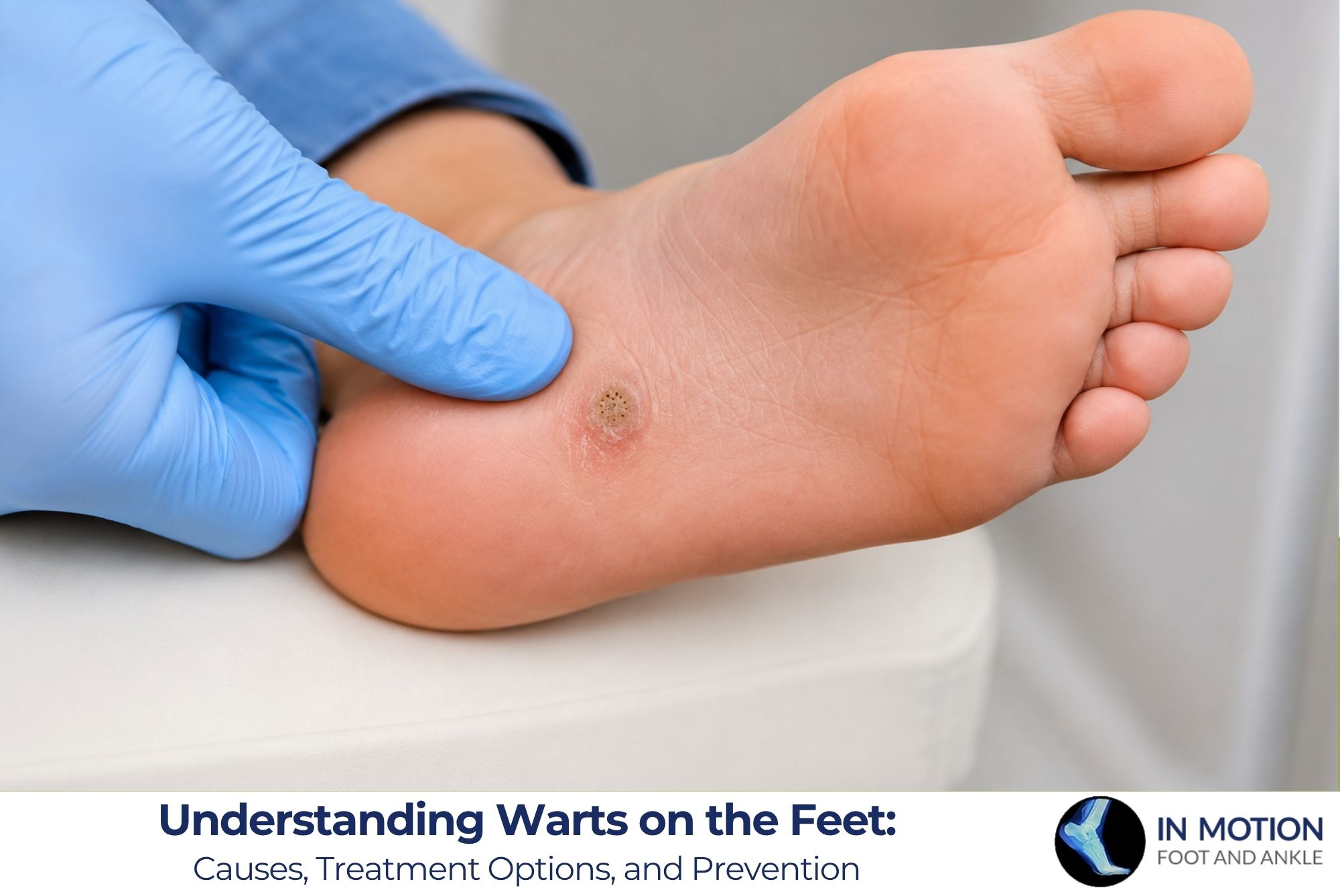
 Warts are a common foot condition that can affect people of all ages. While they may seem like a minor nuisance at first, untreated warts can become painful, spread to other areas of the body, and even make everyday activities such as walking and exercising uncomfortable. At In Motion Foot & Ankle, we help patients throughout Houston and Cypress, TX diagnose, treat, and prevent foot warts using the latest podiatric care techniques.
What Are Foot Warts?
Foot warts, also known as plantar warts, are small growths that develop on the soles of the feet. They are caused by the human papillomavirus (HPV), which enters the skin through tiny cuts, cracks, or weak spots on the foot. Unlike warts that appear elsewhere on the body, plantar warts grow inward due to the pressure exerted when standing or walking.
These growths can appear individually or in clusters known as mosaic warts.
What Causes Plantar Warts?
Plantar warts develop when HPV infects the outer layer of skin on the foot. The virus thrives in warm, moist environments and can often be contracted in places such as:
- Public swimming pools
- Locker rooms
- Gym showers
- Communal changing areas
- Shared footwear
Not everyone exposed to HPV develops warts. Individuals with weakened immune systems, children, teenagers, and people who frequently walk barefoot are at greater risk.
Common Symptoms of Foot Warts
Plantar warts can vary in appearance, but common symptoms include:
- Small, rough growths on the sole of the foot
- Thickened skin resembling a callus
- Tiny black dots within the wart (clotted blood vessels)
- Pain or tenderness while standing or walking
- Discomfort when pressure is applied to the area
- Disruption of normal walking patterns
Because plantar warts often resemble corns or calluses, professional diagnosis is important to ensure proper treatment.
Why Professional Treatment Matters
Many over-the-counter wart treatments are ineffective for deep plantar warts and may damage surrounding healthy skin if used incorrectly. Additionally, some lesions that appear to be warts may actually be other skin conditions requiring different treatment approaches.
A podiatrist can accurately diagnose the lesion and recommend the most effective treatment based on its size, location, and severity.
Treatment Options for Plantar Warts
At In Motion Foot & Ankle, treatment plans are customized to each patient’s needs and may include:
Topical Medications
Prescription-strength topical treatments can help destroy wart tissue and stimulate the body’s immune response.
Cryotherapy
Cryotherapy involves freezing the wart with a specialized solution. This treatment damages infected tissue, allowing healthy skin to replace it over time.
Laser Therapy
Laser treatment targets the blood vessels feeding the wart, helping eliminate the infection while minimizing damage to surrounding tissue.
Surgical Removal
For persistent or painful warts that do not respond to conservative treatment, surgical removal may be recommended.
Immune-Based Therapies
Certain treatments work by stimulating the body’s immune system to recognize and eliminate the virus responsible for the wart.
Can Plantar Warts Go Away on Their Own?
In some cases, plantar warts may eventually disappear without treatment. However, this process can take months or even years. During that time, warts may enlarge, spread to other areas of the foot, or become increasingly painful.
Seeking professional treatment often results in faster relief and reduces the risk of recurrence or transmission.
Preventing Foot Warts
While not all cases can be prevented, the following steps can help lower your risk:
- Wear sandals or water shoes in public showers and pool areas.
- Avoid sharing shoes, socks, or towels.
- Keep feet clean and dry.
- Change socks regularly.
- Avoid picking at existing warts.
- Cover cuts and scrapes on your feet.
- Maintain good overall foot hygiene.
When Should You See a Podiatrist?
Schedule an appointment if you experience:
- Persistent foot pain
- A growth that changes appearance
- Multiple warts developing on the foot
- Difficulty walking due to discomfort
- Recurring warts after home treatment
- Diabetes or circulation issues along with a suspected wart
Prompt evaluation can help prevent complications and ensure effective treatment.
Frequently Asked Questions About Foot Warts
Are plantar warts contagious?
Yes. Plantar warts are caused by HPV and can spread through direct contact with infected skin or contaminated surfaces.
How do I know if I have a wart or a callus?
Warts often contain tiny black dots and may interrupt normal skin lines. Calluses are generally uniform areas of thickened skin caused by pressure or friction. A podiatrist can provide an accurate diagnosis.
Can I remove a plantar wart myself?
Over-the-counter treatments may work for some small warts, but deeper or stubborn plantar warts often require professional care. Improper treatment can lead to infection, pain, or scarring.
Are plantar warts dangerous?
Most plantar warts are benign, but they can become painful and spread if left untreated. Any suspicious skin growth should be evaluated by a foot specialist.
Why do plantar warts hurt?
Because they grow inward on weight-bearing areas of the foot, pressure from standing and walking can push the wart deeper into the skin, causing pain.
Can children get plantar warts?
Yes. Children and teenagers are particularly susceptible because their immune systems may not yet have developed resistance to HPV strains.
How long does wart treatment take?
Treatment time varies depending on the size, depth, and number of warts. Some respond within weeks, while others may require multiple treatment sessions.
Can plantar warts come back after treatment?
Yes. Because HPV can remain in surrounding tissue, recurrence is possible. Following preventive measures and your podiatrist’s recommendations can reduce this risk.
Is wart treatment painful?
Most treatments cause minimal discomfort. Your podiatrist will discuss what to expect and recommend the most comfortable option for your situation.
When should I seek professional treatment?
You should seek professional care if the wart is painful, spreading, recurring, or interfering with daily activities.
Expert Wart Treatment in Houston (Cypress), TX
If you are experiencing pain, discomfort, or concerns related to plantar warts, the experienced team at In Motion Foot & Ankle is here to help. We provide comprehensive diagnosis and advanced treatment options designed to eliminate warts and restore your foot health.
Contact Information
In Motion Foot & Ankle
10425 Huffmeister Rd., Suite 260
Houston (Cypress), TX 77065
Phone: (281) 955-5500
Website: https://inmotionfootankle.com


