
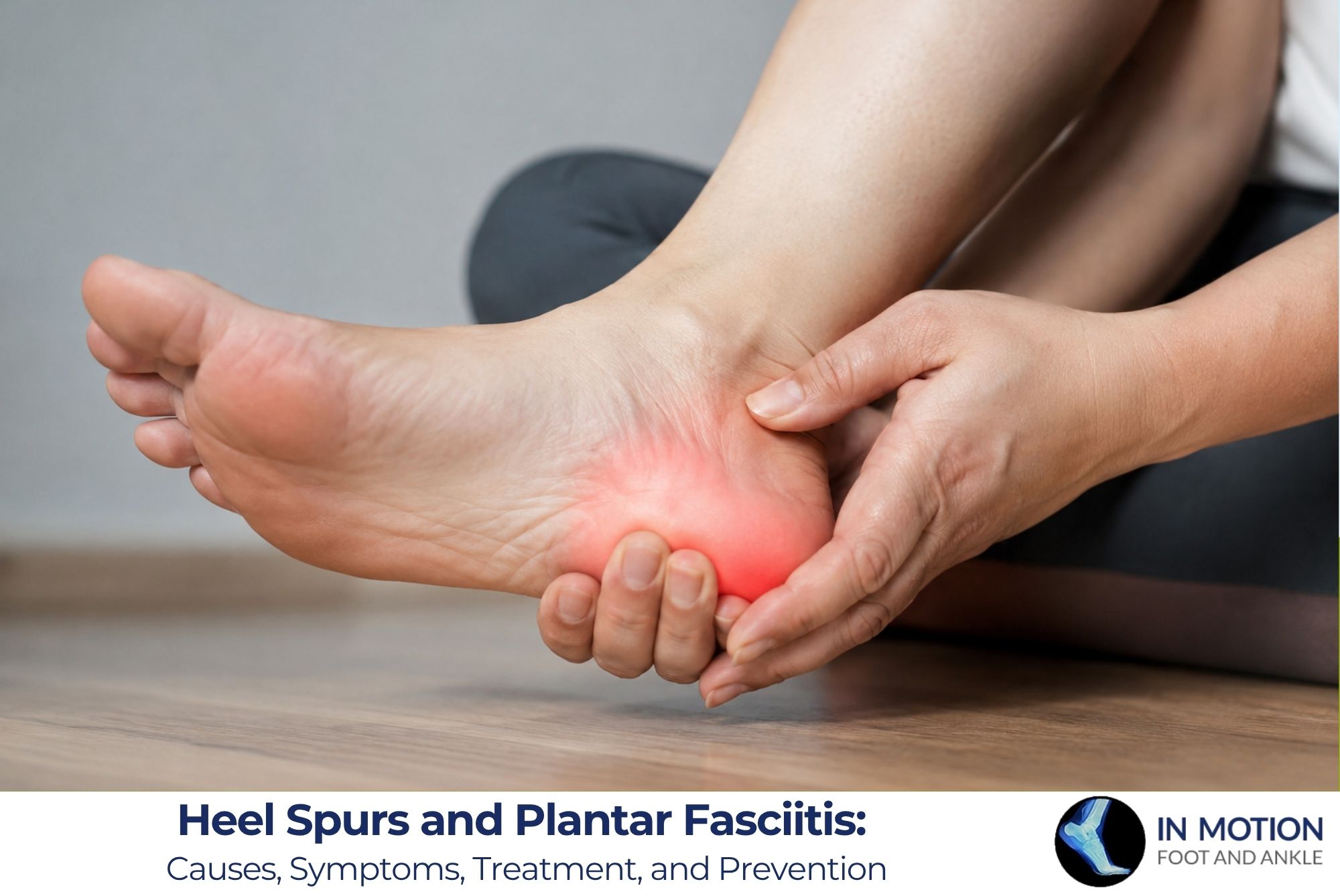
 Understanding Heel Pain: Heel Spurs and Plantar Fasciitis
Heel pain is one of the most common foot complaints affecting people of all ages. Whether you’re an athlete, spend long hours standing at work, or simply enjoy staying active, persistent heel pain can significantly impact your quality of life. Two of the most frequently diagnosed causes of heel pain are heel spurs and plantar fasciitis.
Although these conditions are often discussed together, they are not the same thing. Understanding the differences, symptoms, causes, and available treatment options can help you take the right steps toward lasting relief.
At In Motion Foot & Ankle, our experienced podiatric specialists help patients throughout the Houston and Cypress, TX area diagnose and effectively treat heel pain so they can get back to their active lifestyles.
What Is Plantar Fasciitis?
Plantar fasciitis is an inflammation of the plantar fascia, a thick band of connective tissue that runs along the bottom of your foot from the heel bone to the toes. The plantar fascia acts like a shock absorber and supports the arch of your foot.
When excessive stress is placed on this tissue, small tears can develop, leading to inflammation, pain, and stiffness.
Common Symptoms of Plantar Fasciitis
- Sharp pain in the heel upon waking in the morning
- Pain after prolonged sitting or rest
- Heel discomfort that improves with activity but worsens later
- Tenderness along the bottom of the foot
- Stiffness in the arch and heel
- Pain after exercise rather than during activity
What Are Heel Spurs?
A heel spur is a calcium deposit that forms a bony protrusion on the underside of the heel bone (calcaneus). Heel spurs typically develop over time due to chronic stress and strain on foot muscles and ligaments.
Many people with heel spurs experience no symptoms at all. However, when a heel spur irritates surrounding tissues, it may contribute to chronic heel pain.
Common Symptoms of Heel Spurs
- Localized heel pain
- Inflammation around the heel
- Tenderness when walking or standing
- Pain that may feel like a pin or needle in the heel
- Discomfort during prolonged activity
Are Heel Spurs and Plantar Fasciitis Related?
Yes. Plantar fasciitis and heel spurs are closely related conditions.
Research shows that many patients diagnosed with plantar fasciitis also have heel spurs visible on X-rays. However, the heel spur itself is not always the source of pain. In many cases, inflammation of the plantar fascia causes symptoms rather than the bony growth.
A comprehensive examination by a podiatrist is essential for determining the exact cause of heel pain and developing an effective treatment plan.
Causes and Risk Factors
Several factors can increase the likelihood of developing plantar fasciitis and heel spurs.
Risk Factors Include:
- Flat feet or high arches
- Obesity or excess body weight
- Prolonged standing or walking
- Running and high-impact sports
- Improper footwear
- Tight calf muscles
- Aging and natural wear on foot structures
- Occupations requiring long periods on hard surfaces
- Abnormal walking patterns
How Are Heel Spurs and Plantar Fasciitis Diagnosed?
At In Motion Foot & Ankle, diagnosis begins with a thorough evaluation of your symptoms, medical history, and foot structure.
Diagnostic methods may include:
Physical Examination
Your podiatrist will assess:
- Location of pain
- Foot mechanics
- Range of motion
- Gait patterns
- Areas of tenderness
Diagnostic Imaging
Imaging studies may include:
- X-rays to identify heel spurs
- Ultrasound imaging
- MRI scans in complex cases
Accurate diagnosis helps ensure the most effective treatment plan for your specific condition.
Treatment Options for Heel Spurs and Plantar Fasciitis
The good news is that most patients find relief through conservative treatments without requiring surgery.
Rest and Activity Modification
Reducing activities that aggravate symptoms can help decrease inflammation and promote healing.
Stretching Exercises
Targeted stretching of the plantar fascia and calf muscles can improve flexibility and reduce tension on the heel.
Custom Orthotics
Custom orthotic devices provide proper support, improve foot alignment, and reduce stress on the plantar fascia.
Supportive Footwear
Proper shoes with adequate cushioning and arch support are essential for reducing heel pain.
Anti-Inflammatory Medications
Over-the-counter or prescription medications may help reduce inflammation and discomfort.
Physical Therapy
Physical therapy can improve strength, flexibility, and foot mechanics while accelerating recovery.
Night Splints
Night splints help maintain a gentle stretch of the plantar fascia while sleeping.
Corticosteroid Injections
In some cases, injections may be recommended to reduce severe inflammation.
Advanced Therapies
Depending on the severity of your condition, advanced treatment options may include:
- Extracorporeal Shockwave Therapy (ESWT)
- Regenerative medicine treatments
- Ultrasound-guided therapies
Surgical Treatment
When conservative treatment fails after several months, surgical intervention may be considered. Surgical procedures are typically reserved for severe or chronic cases.
Preventing Heel Spurs and Plantar Fasciitis
Prevention is often the best treatment.
Tips for Preventing Heel Pain
- Wear supportive footwear
- Replace worn-out athletic shoes regularly
- Maintain a healthy weight
- Stretch daily
- Avoid prolonged standing when possible
- Gradually increase exercise intensity
- Use orthotics if recommended
- Strengthen foot and calf muscles
When Should You See a Podiatrist?
You should schedule an evaluation if:
- Heel pain persists for more than a few weeks
- Pain interferes with daily activities
- Symptoms worsen despite home treatment
- Walking becomes difficult
- You experience swelling or significant tenderness
Early intervention often leads to faster recovery and helps prevent chronic foot problems.
Trust In Motion Foot & Ankle for Heel Pain Relief
Heel pain can be frustrating, but effective treatment is available. Whether you’re suffering from plantar fasciitis, heel spurs, or another foot condition, the experienced team at In Motion Foot & Ankle provides personalized care designed to relieve pain, restore mobility, and help you return to the activities you enjoy.
If you’re experiencing ongoing heel discomfort, don’t wait for the condition to worsen. Professional evaluation and treatment can help you find lasting relief.
Frequently Asked Questions (Q&A)
What is the difference between plantar fasciitis and a heel spur?
Plantar fasciitis is inflammation of the plantar fascia ligament, while a heel spur is a calcium deposit that creates a bony growth on the heel bone. They often occur together but are distinct conditions.
Can a heel spur go away on its own?
Heel spurs typically do not disappear once formed. However, many people experience symptom relief through conservative treatments without needing the spur removed.
Is plantar fasciitis permanent?
No. Most cases improve significantly with proper treatment, stretching, supportive footwear, and activity modification.
How long does plantar fasciitis take to heal?
Recovery times vary, but many patients improve within several weeks to several months with appropriate treatment.
What shoes are best for plantar fasciitis?
Supportive shoes with strong arch support, cushioning, and shock absorption are generally recommended.
Are custom orthotics effective?
Yes. Custom orthotics can significantly reduce stress on the plantar fascia and improve foot alignment, often leading to substantial symptom relief.
Can I still exercise with plantar fasciitis?
Low-impact activities such as swimming, cycling, and certain forms of strength training may be appropriate. Consult your podiatrist for individualized recommendations.
Is surgery necessary for heel spurs?
Most heel spur cases do not require surgery. Conservative treatments are successful for the majority of patients.
Why is heel pain worse in the morning?
During sleep, the plantar fascia contracts slightly. When you take your first steps in the morning, the tissue stretches suddenly, causing pain.
When should I seek professional treatment?
If heel pain lasts longer than a few weeks, worsens, or interferes with daily activities, professional evaluation is recommended.
Contact In Motion Foot & Ankle
In Motion Foot & Ankle
10425 Huffmeister Rd. Suite 260
Houston (Cypress), TX 77065
Phone: (281) 955-5500
Website: https://inmotionfootankle.com


