 Understanding Corns and How to Keep Your Feet Healthy
Your feet support your body every day, helping you walk, exercise, work, and enjoy daily activities. When persistent pressure or friction affects certain areas of the foot, painful skin conditions known as corns can develop. While corns are common, they should never be ignored, especially when they cause discomfort or interfere with mobility.
At In Motion Foot & Ankle, our experienced podiatry team helps patients throughout Houston and Cypress, TX, find lasting relief from painful corns and other foot conditions. Understanding what corns are, why they develop, and how they can be treated is the first step toward healthier, pain-free feet.
What Are Corns?
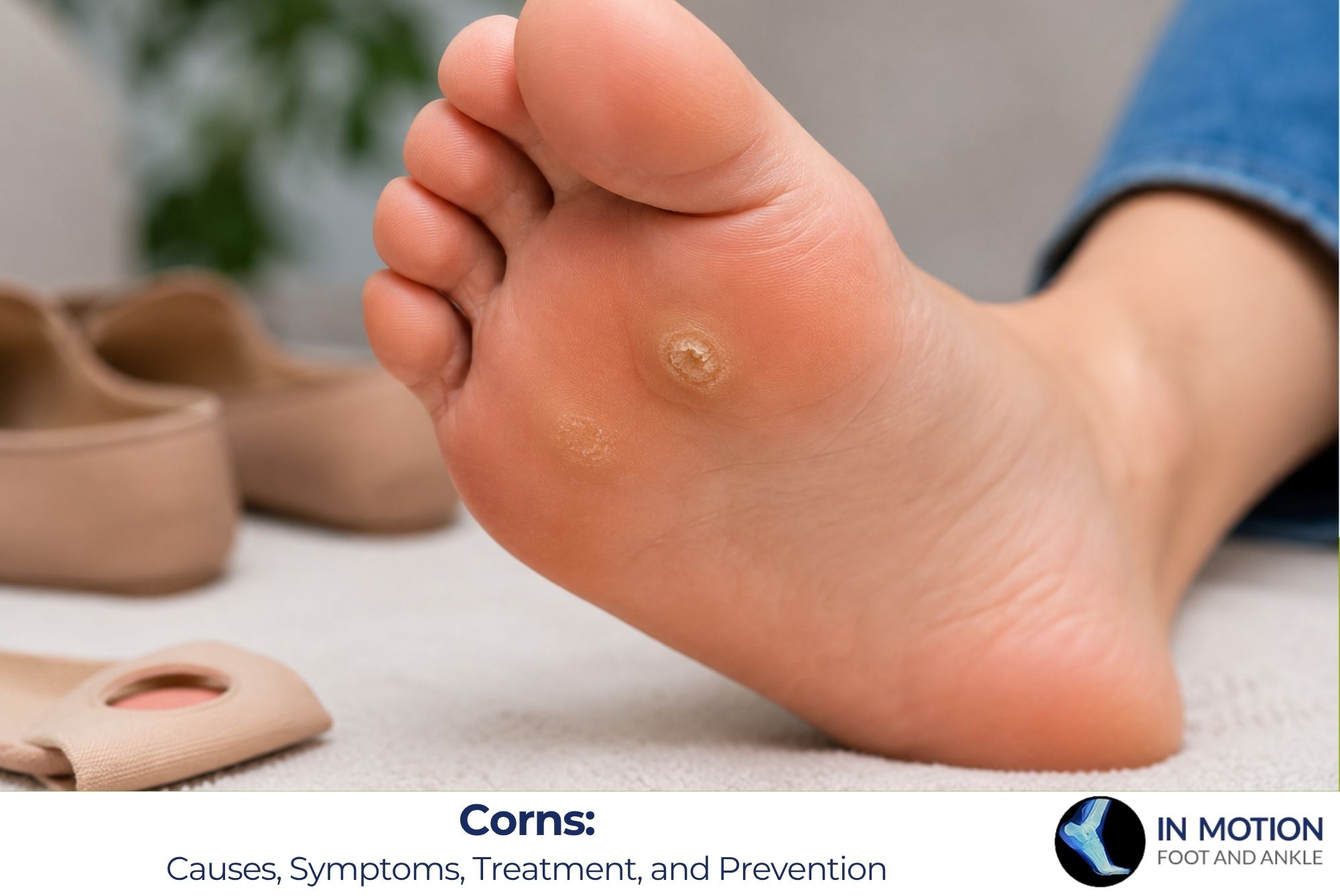
Corns are thickened areas of hardened skin that develop in response to repeated pressure or friction. They typically form on the feet, particularly on weight-bearing areas or locations where shoes rub against the skin.
Unlike calluses, which tend to be larger and more diffuse, corns are usually smaller and have a hard center surrounded by inflamed skin. Corns can become painful when pressure is applied directly to the affected area.
Types of Corns
There are several different types of corns:
Hard Corns
Hard corns are the most common type. They typically develop on the tops or sides of toes where bone pressure is greatest.
Soft Corns
Soft corns often develop between the toes where moisture is trapped. They appear white or gray and may be tender to the touch.
Seed Corns
Seed corns are small, pinpoint-sized corns that usually form on the bottom of the foot. Though less common, they can still cause discomfort.
What Causes Corns?
Corns develop when skin attempts to protect itself from ongoing irritation. Common causes include:
Poorly Fitting Footwear
Shoes that are too tight, too loose, or have narrow toe boxes can create excessive friction and pressure.
Foot Deformities
Conditions such as hammertoes, bunions, and other structural abnormalities can alter weight distribution and increase pressure points.
Repetitive Activities
Walking, running, standing for long periods, or participating in sports may contribute to corn formation.
Improper Socks
Socks that bunch up or do not fit properly can increase friction and irritation.
Walking Barefoot
Regularly walking barefoot may increase pressure on certain areas of the feet, leading to corn development.
Symptoms of Corns
Common signs and symptoms include:
- Thickened, hardened skin
- Raised bumps on the foot or toes
- Tenderness or pain when walking
- Sensitivity when pressure is applied
- Dry, flaky, or waxy skin
- Discomfort while wearing shoes
While some corns may initially seem harmless, they can worsen over time and become increasingly painful.
Why Professional Treatment Matters
Many people attempt to remove corns at home using over-the-counter products or sharp instruments. However, self-treatment can be risky and may lead to infection, especially for individuals with diabetes, neuropathy, or poor circulation.
Professional evaluation helps determine the underlying cause of the corn and ensures safe, effective treatment.
Corn Treatment Options
At In Motion Foot & Ankle, treatment plans are tailored to each patient’s specific needs.
Corn Debridement
A podiatrist can carefully reduce and remove thickened skin using sterile instruments, providing immediate relief.
Footwear Recommendations
Properly fitted shoes can significantly reduce friction and prevent recurrence.
Custom Orthotics
Custom orthotic devices help redistribute pressure and correct abnormal foot mechanics.
Padding and Protective Devices
Special pads or toe separators can reduce irritation and promote healing.
Treatment of Underlying Conditions
Addressing bunions, hammertoes, or other foot deformities can prevent future corns from developing.
Surgical Correction
In severe or recurring cases, correcting the structural cause of pressure may provide long-term relief.
How to Prevent Corns
Preventive care is often the best treatment.
Choose Proper Footwear
Select shoes with adequate cushioning, support, and room for your toes.
Wear Moisture-Wicking Socks
Proper socks help reduce friction and moisture buildup.
Inspect Your Feet Regularly
Look for areas of redness, thickened skin, or irritation.
Use Protective Padding
Protect vulnerable areas if you are prone to developing corns.
Address Foot Problems Early
Seek professional evaluation if you notice bunions, hammertoes, or changes in foot alignment.
When Should You See a Podiatrist?
Schedule an appointment if:
- Corns become painful
- Home remedies are not helping
- You have diabetes or circulation problems
- The corn frequently returns
- Walking becomes uncomfortable
- You notice signs of infection such as redness, swelling, or drainage
Prompt treatment can help prevent complications and improve overall foot health.
Frequently Asked Questions About Corns
Are corns and calluses the same thing?
No. Both are areas of thickened skin caused by friction and pressure, but corns are typically smaller, have a hard center, and may be more painful than calluses.
Can corns go away on their own?
If the source of pressure or friction is eliminated, some corns may gradually improve. However, many require professional treatment to fully resolve.
Are corns contagious?
No. Corns are not caused by viruses or bacteria and cannot spread from person to person.
Can I cut a corn off myself?
No. Attempting to remove a corn yourself can lead to injury, infection, and complications. Professional treatment is much safer.
Why do my corns keep coming back?
Recurring corns usually indicate an underlying issue such as improper footwear, foot deformities, or abnormal walking patterns that continue to create pressure.
Are corn removal products safe?
Over-the-counter corn removers often contain acids that can damage healthy skin. They should be used cautiously and are generally not recommended for individuals with diabetes or poor circulation.
Can corns cause serious problems?
While corns themselves are generally not dangerous, untreated corns can become painful and may lead to ulcers or infections in high-risk individuals.
What shoes are best for preventing corns?
Shoes with a wide toe box, proper cushioning, and good arch support help reduce pressure and friction.
Can children get corns?
Yes. Although more common in adults, children can develop corns due to poorly fitting shoes or abnormal foot mechanics.
How can a podiatrist help?
A podiatrist can safely remove corns, identify the underlying cause, recommend preventive measures, and develop a treatment plan tailored to your needs.
Trust In Motion Foot & Ankle for Expert Corn Treatment
If painful corns are affecting your comfort, mobility, or quality of life, professional podiatric care can help. The team at In Motion Foot & Ankle provides comprehensive diagnosis, treatment, and preventive care to help patients throughout Houston and Cypress achieve healthier feet and lasting relief.
Don’t let foot pain slow you down. Schedule an appointment today and take the first step toward healthier, more comfortable feet.
Contact Information
In Motion Foot & Ankle
10425 Huffmeister Rd. Suite 260
Houston (Cypress), TX 77065
Phone: (281) 955-5500
Website: https://inmotionfootankle.com


