 Understanding Bunions: What You Need to Know
Bunions are one of the most common foot conditions affecting millions of people worldwide. While often dismissed as a cosmetic concern, bunions can cause significant pain, discomfort, and difficulty walking if left untreated. At In Motion Foot & Ankle, we help patients throughout Houston and Cypress, Texas, find lasting relief from bunions through comprehensive diagnosis and personalized treatment plans.
Whether you’re experiencing mild discomfort or severe foot pain, understanding bunions and their treatment options is the first step toward healthier feet and improved mobility.
What Is a Bunion?
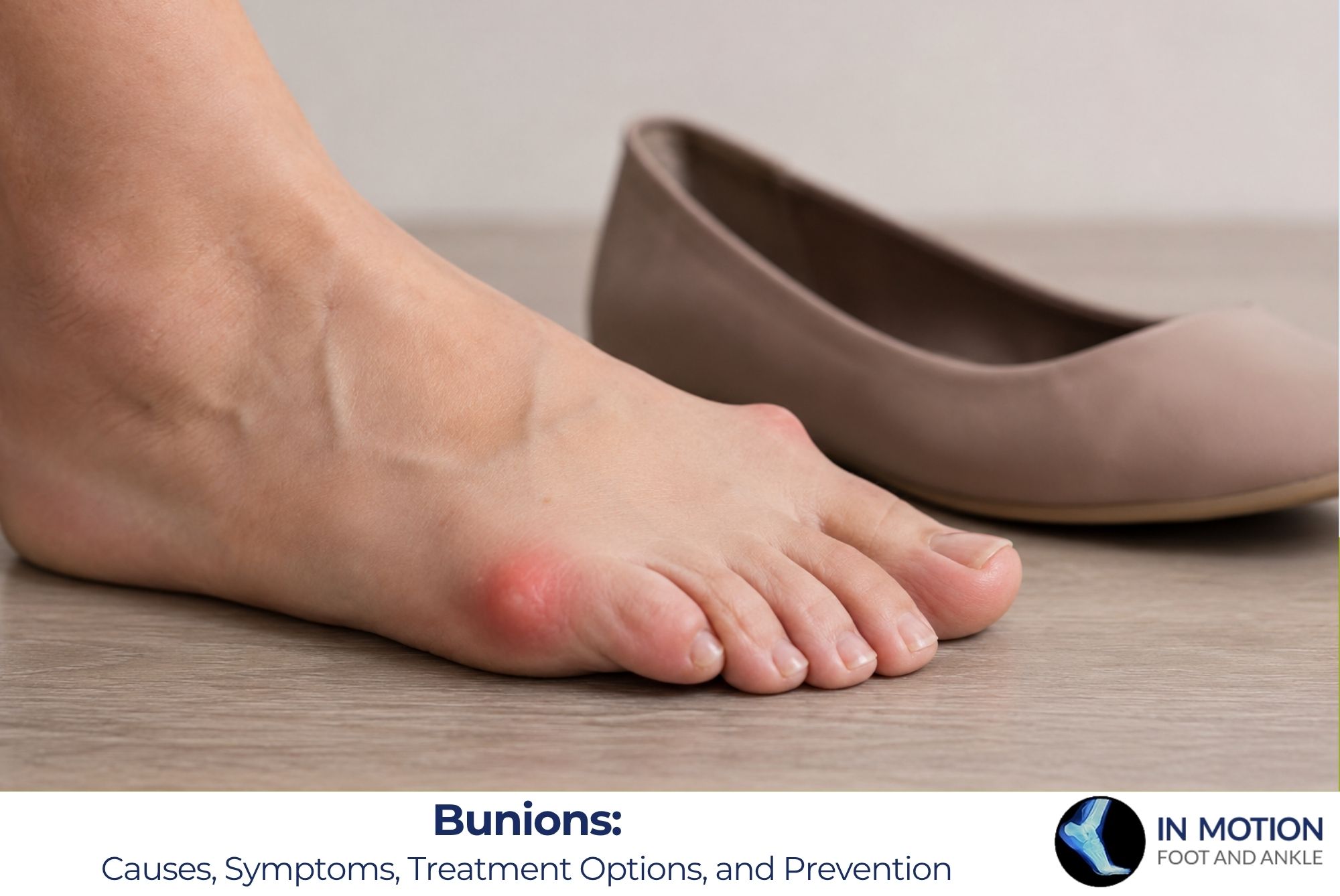
A bunion, medically known as hallux valgus, is a bony bump that forms at the base of the big toe joint. This condition develops when the big toe gradually shifts toward the second toe, causing the joint at the base of the toe to protrude outward.
Over time, this misalignment can worsen, leading to increased pain, inflammation, and difficulty wearing shoes comfortably.
What Causes Bunions?
Several factors can contribute to bunion development, including:
Genetics
Many people inherit foot structures that make them more susceptible to developing bunions. If your parents or grandparents had bunions, your risk may be higher.
Foot Structure Abnormalities
Flat feet, loose ligaments, and abnormal bone alignment can increase pressure on the big toe joint.
Improper Footwear
Wearing narrow, tight, or high-heeled shoes can exacerbate bunion formation by forcing the toes into unnatural positions.
Arthritis
Inflammatory conditions such as rheumatoid arthritis can weaken the joints and contribute to bunion development.
Repetitive Stress
Occupations or activities that place excessive pressure on the feet may increase the likelihood of developing bunions.
Common Symptoms of Bunions
Bunion symptoms often worsen over time and may include:
- A visible bump at the base of the big toe
- Swelling and redness around the joint
- Persistent or intermittent pain
- Limited movement of the big toe
- Corns or calluses between the first and second toes
- Difficulty wearing shoes comfortably
- Numbness or burning sensations
- Changes in walking patterns
If you experience any of these symptoms, it is important to seek evaluation from a qualified podiatrist.
How Bunions Are Diagnosed
At In Motion Foot & Ankle, bunion diagnosis typically involves:
Physical Examination
Your podiatrist will assess the alignment of your foot and evaluate symptoms.
Medical History Review
Understanding your symptoms, family history, and lifestyle factors helps determine the severity of the condition.
Digital X-Rays
Imaging allows us to evaluate bone alignment, joint damage, and the extent of the deformity.
Non-Surgical Bunion Treatments
Many patients find relief through conservative treatment options, particularly when bunions are diagnosed early.
Custom Orthotics
Custom orthotic devices help redistribute pressure and improve foot alignment.
Footwear Modifications
Wearing wider shoes with proper arch support can significantly reduce discomfort.
Padding and Splints
Protective padding and night splints may help alleviate pressure on the affected joint.
Anti-Inflammatory Medications
Over-the-counter medications can help reduce pain and swelling.
Physical Therapy
Stretching and strengthening exercises may improve flexibility and reduce symptoms.
Activity Modifications
Reducing activities that aggravate the bunion can help manage pain.
When Is Bunion Surgery Necessary?
If conservative treatments fail to provide adequate relief, surgical correction may be recommended.
Bunion surgery may be appropriate when:
- Pain interferes with daily activities
- Walking becomes difficult
- The deformity continues to worsen
- Significant joint damage is present
- Conservative treatments no longer provide relief
Modern bunion surgery techniques can effectively correct alignment, reduce pain, and improve foot function.
Benefits of Early Bunion Treatment
Seeking treatment early offers several advantages:
- Prevents progression of the deformity
- Reduces chronic pain
- Improves mobility
- Enhances shoe comfort
- Helps avoid future complications
- May delay or eliminate the need for surgery
How to Prevent Bunions
While some bunions are hereditary, several preventive measures may reduce your risk:
Choose Proper Footwear
Select shoes with:
- Wide toe boxes
- Good arch support
- Low heels
- Adequate cushioning
Maintain a Healthy Weight
Reducing excess pressure on your feet can help protect the joints.
Use Orthotics When Needed
Custom orthotics can improve foot mechanics and minimize stress.
Stretch and Strengthen Your Feet
Regular exercises help maintain flexibility and support proper alignment.
Schedule Regular Foot Evaluations
Routine podiatric exams can identify issues before they become severe.
Why Choose In Motion Foot & Ankle for Bunion Treatment?
At In Motion Foot & Ankle, we understand how bunions can impact your daily life. Our experienced team provides personalized care using advanced diagnostic technology and evidence-based treatment options.
We are committed to helping patients throughout Houston and Cypress achieve lasting relief from foot pain and return to the activities they enjoy most.
Frequently Asked Questions About Bunions
Are bunions hereditary?
Yes. Genetics play a significant role in bunion development. Individuals with a family history of bunions are often at greater risk.
Can bunions go away on their own?
No. Bunions do not disappear without treatment. However, symptoms can often be managed with conservative care.
Do bunions always require surgery?
No. Many patients achieve relief through non-surgical treatments such as orthotics, footwear changes, and physical therapy.
What happens if a bunion is left untreated?
Untreated bunions may continue to worsen, causing increased pain, joint damage, mobility issues, and difficulty wearing shoes.
Can wearing high heels cause bunions?
High heels do not directly cause bunions but can contribute to their progression by placing excessive pressure on the forefoot.
How long does bunion surgery recovery take?
Recovery varies depending on the procedure performed. Most patients can resume many normal activities within several weeks, although full recovery may take several months.
Are bunions painful?
They can be. Some individuals experience mild discomfort, while others suffer from significant pain that interferes with daily activities.
Can custom orthotics help bunions?
Yes. Custom orthotics can improve foot alignment, reduce pressure on the bunion, and help manage symptoms.
Can children develop bunions?
Yes. Juvenile bunions can occur, especially in children with inherited foot structure abnormalities.
How can I tell if my bunion is getting worse?
Signs include increased pain, a larger visible bump, difficulty finding comfortable shoes, and greater deviation of the big toe toward the second toe.
Should I see a podiatrist for a bunion?
Absolutely. Early evaluation by a podiatrist can help prevent progression and identify the most effective treatment options.
What type of shoes are best for people with bunions?
Shoes with wide toe boxes, low heels, adequate cushioning, and strong arch support are generally recommended.
Contact In Motion Foot & Ankle
In Motion Foot & Ankle
10425 Huffmeister Rd. Suite 260
Houston (Cypress), TX 77065
Phone: (281) 955-5500
Website: https://inmotionfootankle.com


