
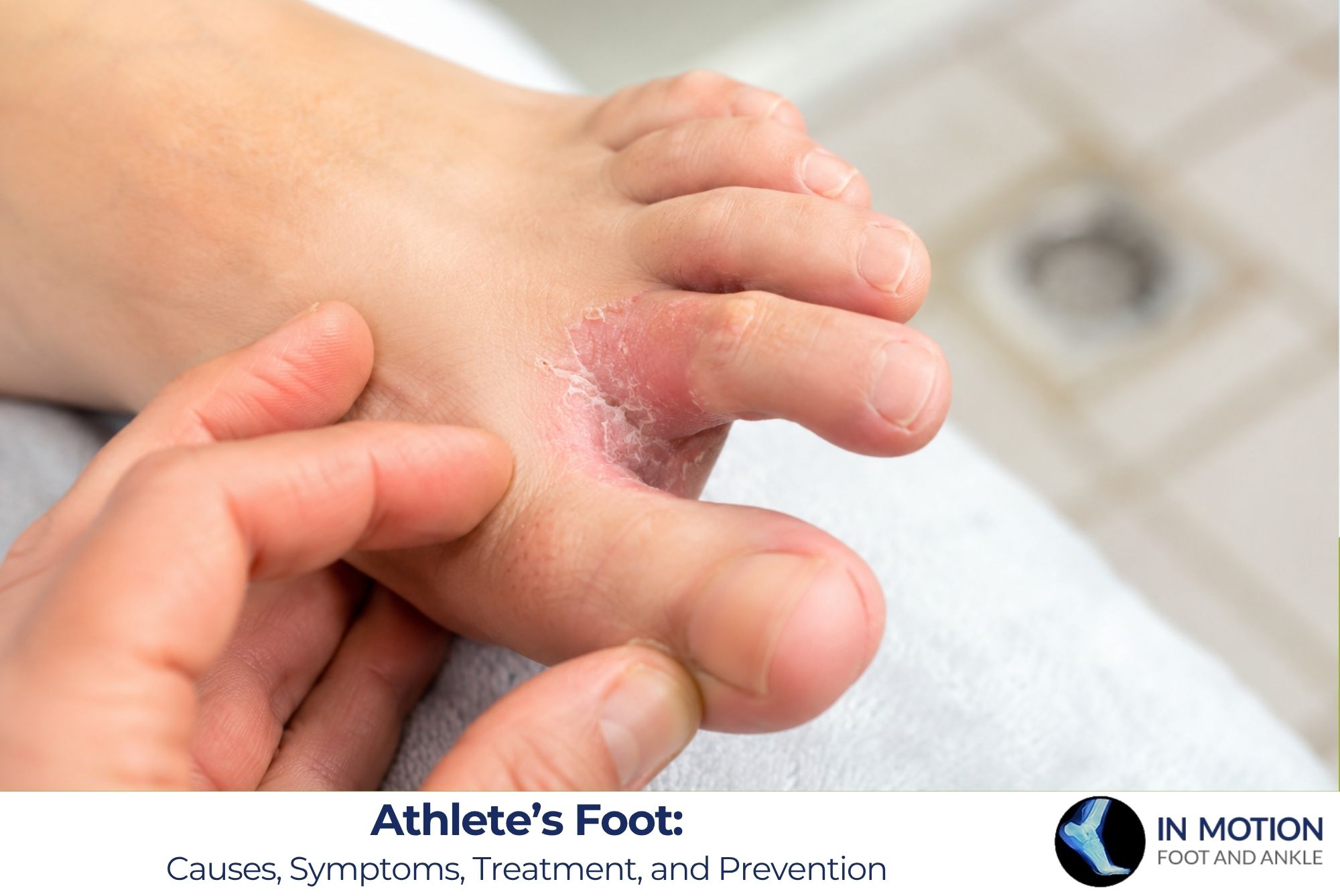
 Athlete’s foot is one of the most common fungal infections affecting millions of people every year. Despite its name, you do not have to be an athlete to develop this condition. Athlete’s foot can affect anyone, especially individuals who spend time in warm, moist environments or frequently wear enclosed footwear. While it often starts as a minor irritation, untreated athlete’s foot can spread, worsen, and even lead to secondary infections.
At In Motion Foot & Ankle, we help patients throughout Houston and Cypress, TX identify, treat, and prevent athlete’s foot and other foot-related conditions. Understanding the causes, symptoms, and treatment options can help you protect your foot health and avoid recurring infections.
What Is Athlete’s Foot?
Athlete’s foot, medically known as tinea pedis, is a contagious fungal infection that affects the skin on the feet. It commonly develops between the toes but can also spread to the soles, sides of the feet, and even the toenails.
The fungi responsible for athlete’s foot thrive in warm, damp environments such as:
- Locker rooms
- Public showers
- Swimming pool areas
- Gym floors
- Sweaty shoes and socks
Because these fungi flourish in moisture, people who experience excessive foot sweating are often at a higher risk.
Common Symptoms of Athlete’s Foot
Athlete’s foot symptoms can vary from mild to severe. Common signs include:
Itching and Burning
Persistent itching, especially between the toes, is often the first symptom. Many people also experience a burning sensation that worsens after removing shoes and socks.
Redness and Inflammation
The affected skin may become red, irritated, and inflamed.
Peeling or Cracking Skin
The skin between the toes may crack, peel, or flake. Severe cases can result in painful fissures.
Dry, Scaly Skin
Some forms of athlete’s foot cause dry, scaly patches on the bottoms or sides of the feet.
Blisters
Fluid-filled blisters may develop, causing discomfort and increasing the risk of infection.
Unpleasant Odor
Fungal infections can sometimes produce a persistent foot odor that does not improve with routine hygiene.
What Causes Athlete’s Foot?
Athlete’s foot develops when dermatophyte fungi invade the outer layers of the skin. These fungi spread through direct contact with infected individuals or contaminated surfaces.
Common causes include:
- Walking barefoot in public areas
- Sharing shoes, socks, or towels
- Wearing tight, non-breathable footwear
- Keeping feet damp for extended periods
- Poor foot hygiene
- Excessive sweating
Certain medical conditions that weaken the immune system may also increase susceptibility to fungal infections.
Risk Factors for Athlete’s Foot
Several factors increase the likelihood of developing athlete’s foot:
- Frequent gym use
- Participation in sports
- Living in warm, humid climates
- Excessive foot perspiration
- Wearing damp socks
- Previous fungal infections
- Diabetes
- Compromised immune system
Individuals with diabetes should seek prompt treatment because foot infections can lead to more serious complications.
Types of Athlete’s Foot
Interdigital Athlete’s Foot
This is the most common form and occurs between the toes, particularly between the fourth and fifth toes.
Moccasin-Type Athlete’s Foot
This type affects the soles and sides of the feet, causing chronic dryness, scaling, and thickened skin.
Vesicular Athlete’s Foot
Characterized by painful blisters that often appear on the sole or arch of the foot.
Ulcerative Athlete’s Foot
A more severe form involving open sores and secondary bacterial infections. This type requires immediate medical attention.
How Is Athlete’s Foot Diagnosed?
A podiatrist can often diagnose athlete’s foot through a physical examination. In some cases, a skin sample may be collected and examined under a microscope to confirm the presence of fungal organisms.
Accurate diagnosis is important because several skin conditions, such as eczema and psoriasis, can mimic athlete’s foot symptoms.
Treatment Options for Athlete’s Foot
Over-the-Counter Antifungal Medications
Mild cases often respond well to antifungal creams, sprays, powders, or ointments containing:
- Terbinafine
- Clotrimazole
- Miconazole
- Tolnaftate
Prescription Medications
For persistent or severe infections, a podiatrist may prescribe stronger topical or oral antifungal medications.
Foot Hygiene Improvements
Proper foot care is essential for successful treatment:
- Wash feet daily
- Dry thoroughly between the toes
- Change socks regularly
- Wear breathable footwear
- Alternate shoes to allow complete drying
Treatment for Secondary Infections
If athlete’s foot has led to a bacterial infection, additional medications may be necessary to address the complication.
Can Athlete’s Foot Spread?
Yes. Athlete’s foot is highly contagious and can spread:
- From person to person
- Through contaminated surfaces
- To other areas of your body, including the hands, groin, and toenails
Prompt treatment reduces the risk of spreading the infection and helps prevent recurrence.
How to Prevent Athlete’s Foot
Preventative measures can significantly reduce your risk:
- Wear sandals in public showers and locker rooms
- Keep feet clean and dry
- Change socks daily
- Use antifungal powder if prone to sweating
- Avoid sharing footwear or towels
- Wear breathable shoes
- Alternate footwear regularly
- Disinfect shoes periodically
These simple habits can help maintain healthy feet and prevent future infections.
When Should You See a Podiatrist?
You should schedule an appointment if:
- Symptoms do not improve after several weeks of treatment
- The infection spreads
- You experience severe pain
- Blisters become infected
- You have diabetes or circulation issues
- Toenails become discolored or thickened
Early intervention can prevent complications and provide faster relief.
Frequently Asked Questions About Athlete’s Foot
Is athlete’s foot contagious?
Yes. Athlete’s foot spreads through direct contact with infected skin or contaminated surfaces such as locker room floors and shared footwear.
Can athlete’s foot go away on its own?
Some mild cases may improve temporarily, but most infections require treatment to fully eliminate the fungus and prevent recurrence.
How long does athlete’s foot last?
With appropriate treatment, many cases improve within two to four weeks. More severe infections may require longer treatment.
Can athlete’s foot spread to toenails?
Yes. The fungal infection can spread to the toenails, causing fungal nail infections that are often more difficult to treat.
Is athlete’s foot dangerous?
Most cases are not dangerous, but untreated infections can spread and lead to bacterial infections, especially in people with diabetes.
What is the fastest way to get rid of athlete’s foot?
Early treatment with antifungal medications combined with excellent foot hygiene typically produces the fastest results.
Can children get athlete’s foot?
Yes. Although more common in adults, children can also develop athlete’s foot, especially if they participate in sports or frequent communal locker rooms.
Does athlete’s foot cause foot odor?
It can. The fungal infection may contribute to unpleasant foot odor, particularly when combined with excessive sweating.
Can I still exercise if I have athlete’s foot?
Yes, but it is important to wear clean socks, keep your feet dry, and avoid exposing others to the infection in shared facilities.
How can I prevent athlete’s foot from coming back?
Continue antifungal treatment as directed, maintain proper foot hygiene, wear breathable footwear, and avoid walking barefoot in public areas.
Expert Athlete’s Foot Care in Houston and Cypress, TX
If you are experiencing symptoms of athlete’s foot or recurring fungal infections, professional evaluation can help ensure proper treatment and long-term relief. The experienced team at In Motion Foot & Ankle provides comprehensive foot and ankle care for patients throughout Houston and Cypress, Texas.
Contact Information
In Motion Foot & Ankle
10425 Huffmeister Rd. Suite 260
Houston (Cypress), TX 77065
Phone: (281) 955-5500
Website: https://inmotionfootankle.com


