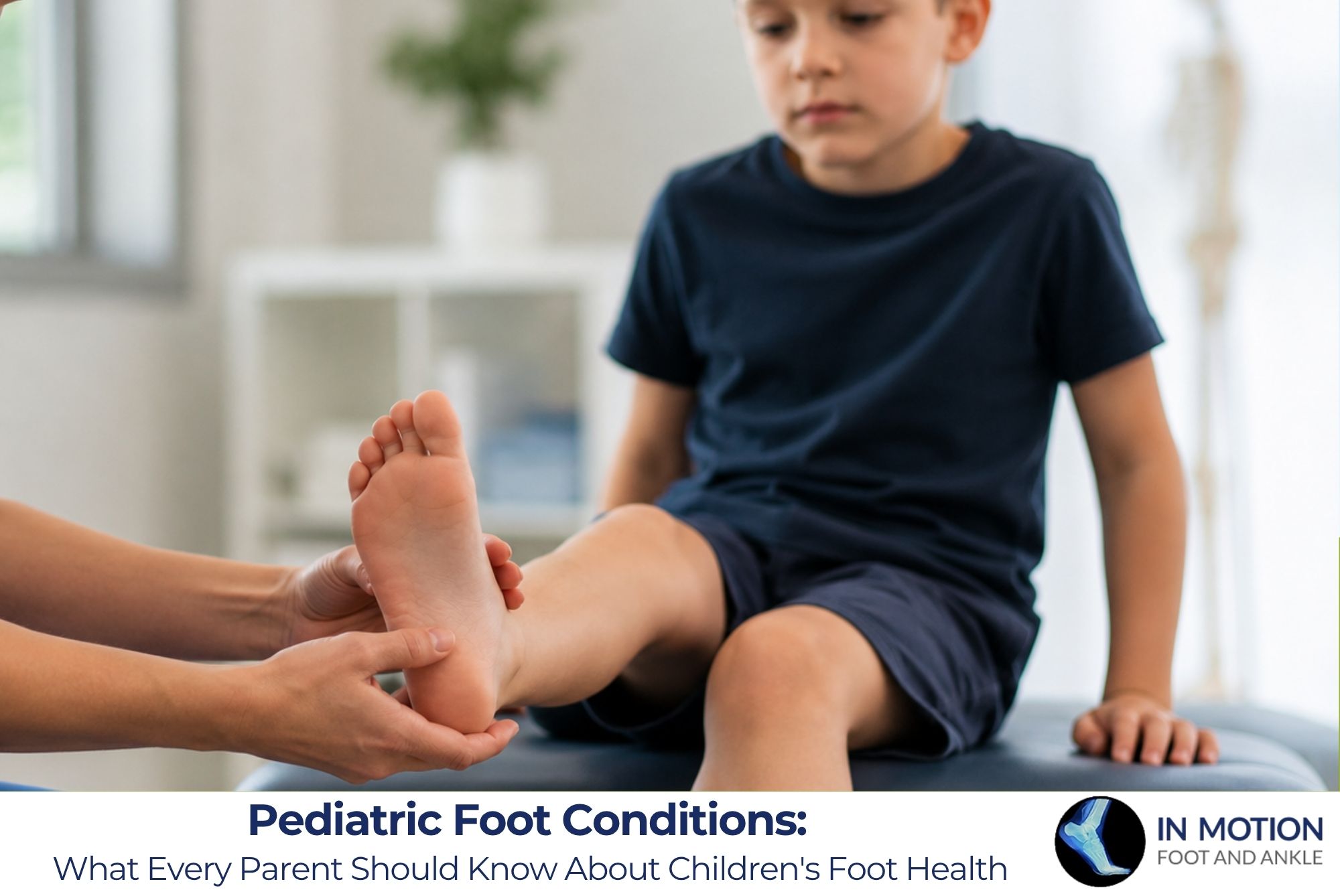
Children’s feet are constantly growing, developing, and adapting as they learn to crawl, walk, run, and participate in sports. While many childhood foot concerns are a normal part of development, some pediatric foot conditions require professional evaluation and treatment to prevent long-term complications. Recognizing the signs of foot problems early can help ensure your child maintains healthy mobility and avoids discomfort that may impact daily activities.
At In Motion Foot & Ankle, our experienced podiatric specialists provide comprehensive pediatric foot care for children of all ages throughout Houston and Cypress, TX. We understand that growing feet require specialized attention and personalized treatment plans to support healthy development.
Why Pediatric Foot Health Matters
A child’s foot contains numerous bones, joints, muscles, ligaments, and tendons that continue developing throughout childhood. Because children’s feet are still growing, early intervention for foot abnormalities can often prevent future pain, mobility limitations, and structural problems.
Parents should pay attention to:
- Frequent tripping or falling
- Complaints of foot or ankle pain
- Walking on tiptoes
- Inward or outward turning feet
- Flat feet that cause discomfort
- Uneven shoe wear
- Limping or changes in gait
- Difficulty participating in sports or physical activities
Regular monitoring of your child’s foot development can help identify concerns before they become more serious.
Common Pediatric Foot Conditions
Flat Feet (Pediatric Flatfoot)
Flat feet occur when the arches of the feet do not develop properly, causing the entire sole to make contact with the ground.
While many children naturally have flat feet during early development, some cases can cause symptoms such as:
- Foot fatigue
- Arch pain
- Heel pain
- Leg discomfort
- Difficulty with physical activities
Treatment may include supportive footwear, custom orthotics, stretching exercises, or other interventions depending on severity and symptoms.
Toe Walking
Many toddlers walk on their toes when first learning to walk. However, persistent toe walking beyond age two or three may indicate an underlying condition.
Potential causes include:
- Tight Achilles tendon
- Neurological conditions
- Muscular disorders
- Developmental concerns
Early evaluation can determine whether treatment is necessary and help prevent future complications.
Ingrown Toenails
Ingrown toenails are common in children and adolescents. They occur when the edge of the nail grows into the surrounding skin, causing:
- Pain
- Redness
- Swelling
- Infection
Professional treatment can relieve discomfort and prevent recurring infections.
Sever’s Disease (Calcaneal Apophysitis)
Sever’s disease is one of the most common causes of heel pain in active children and adolescents. It typically develops during growth spurts when the heel bone grows faster than surrounding muscles and tendons.
Symptoms may include:
- Heel pain during sports
- Limping
- Tenderness at the back of the heel
- Pain after activity
Treatment often involves rest, stretching, supportive footwear, and activity modification.
Plantar Warts
Plantar warts are caused by the human papillomavirus (HPV) and commonly develop on the soles of children’s feet.
Symptoms include:
- Small rough growths on the foot
- Pain when walking
- Black pinpoint spots within the wart
Professional treatment can safely remove warts while minimizing discomfort.
In-Toeing and Out-Toeing
Some children walk with their feet turned inward (in-toeing) or outward (out-toeing). These gait abnormalities are often developmental but may require evaluation if they persist or interfere with mobility.
A podiatric assessment can determine whether treatment or monitoring is appropriate.
Pediatric Bunions
Although often associated with adults, bunions can develop during childhood or adolescence due to genetics and structural foot abnormalities.
Signs include:
- A visible bump near the big toe joint
- Pain or tenderness
- Difficulty finding comfortable shoes
Early treatment may help slow progression and reduce symptoms.
Sports-Related Foot and Ankle Injuries
Active children and teenage athletes are susceptible to:
- Ankle sprains
- Stress fractures
- Tendon injuries
- Growth plate injuries
Prompt diagnosis and treatment help ensure proper healing and safe return to sports.
Warning Signs That Your Child Should See a Foot Specialist
Parents should schedule an evaluation if their child experiences:
- Persistent foot or ankle pain
- Frequent limping
- Difficulty walking
- Recurrent ankle sprains
- Changes in walking patterns
- Foot deformities
- Persistent toe walking
- Sports injuries that do not improve
- Swelling or redness
Early intervention often leads to more effective treatment outcomes.
How Pediatric Foot Conditions Are Diagnosed
At In Motion Foot & Ankle, diagnosis begins with a thorough evaluation that may include:
- Medical history review
- Physical examination
- Gait analysis
- Foot structure assessment
- Imaging studies when necessary
This comprehensive approach allows our specialists to identify underlying causes and develop customized treatment plans.
Treatment Options for Pediatric Foot Conditions
Treatment depends on the specific condition and severity of symptoms.
Common treatment options include:
Custom Orthotics
Custom orthotics provide support, improve alignment, and reduce strain on developing feet.
Physical Therapy and Stretching
Targeted exercises can improve flexibility, strength, and overall foot function.
Supportive Footwear Recommendations
Proper shoes play a critical role in healthy foot development and injury prevention.
Activity Modification
Temporary changes to sports or physical activities may be recommended during recovery.
Minimally Invasive Procedures
In some cases, minor procedures may be necessary to address persistent issues such as ingrown toenails or severe deformities.
Surgical Intervention
Surgery is typically reserved for complex or severe conditions that do not respond to conservative treatments.
Preventing Pediatric Foot Problems
Parents can support healthy foot development by:
- Choosing properly fitted shoes
- Encouraging physical activity
- Monitoring for changes in gait
- Replacing worn-out footwear
- Scheduling prompt evaluations for pain or abnormalities
- Teaching good foot hygiene
Preventive care can help reduce the risk of long-term foot complications.
Trust In Motion Foot & Ankle for Expert Pediatric Foot Care
Children deserve specialized care that supports healthy growth and development. Whether your child is experiencing heel pain, flat feet, sports injuries, or other foot concerns, the experienced team at In Motion Foot & Ankle is committed to providing compassionate, personalized treatment.
Early diagnosis and treatment can make a significant difference in your child’s comfort, mobility, and long-term foot health. If you have concerns about your child’s feet or walking patterns, schedule an evaluation with our team today.
Pediatric Foot Conditions: Frequently Asked Questions
Are flat feet normal in children?
Yes. Many infants and young children naturally have flat feet because their arches are still developing. However, if flat feet cause pain or interfere with activities, a professional evaluation is recommended.
When should I be concerned about my child’s foot pain?
Any persistent foot or ankle pain that lasts more than a few days, affects walking, or limits activity should be evaluated by a podiatrist.
Is toe walking normal?
Toe walking is common in toddlers learning to walk. If it continues beyond age two or three, it may warrant further assessment.
Can children develop bunions?
Yes. Bunions can occur in children and adolescents, often due to genetics or abnormal foot structure.
What causes heel pain in children?
Sever’s disease is one of the most common causes of pediatric heel pain, particularly in active children during growth spurts.
Are custom orthotics safe for children?
Yes. Custom orthotics are frequently used to support healthy foot development and address alignment issues in growing children.
How can I tell if my child’s shoes fit properly?
There should be about a thumb’s width of space between the longest toe and the front of the shoe, with adequate width and support.
What should I do if my child frequently sprains their ankle?
Repeated ankle sprains may indicate instability or biomechanical issues. A podiatric evaluation can help identify underlying causes and appropriate treatment.
Can sports cause foot problems in children?
Yes. High levels of physical activity can increase the risk of overuse injuries, stress fractures, and heel pain.
When should a child see a podiatrist?
A child should see a podiatrist if they experience ongoing foot pain, abnormal walking patterns, injuries, deformities, or any foot condition that affects daily activities.
Contact Information
In Motion Foot & Ankle
10425 Huffmeister Rd., Suite 260
Houston (Cypress), TX 77065
Phone: (281) 955-5500
Website: https://inmotionfootankle.com


