 Millions of people live with flat feet, a condition that can range from completely symptom-free to a source of chronic foot, ankle, knee, and lower back pain. While some individuals are born with flat arches, others develop flat feet later in life due to injury, aging, or medical conditions. Understanding the causes, symptoms, and treatment options can help you maintain mobility and prevent long-term complications.
At In Motion Foot & Ankle, our experienced podiatrists provide comprehensive evaluations and personalized treatment plans for patients experiencing discomfort or limitations caused by flat feet. Whether your symptoms are mild or severe, professional care can help restore comfort and improve your quality of life.
What Are Flat Feet?
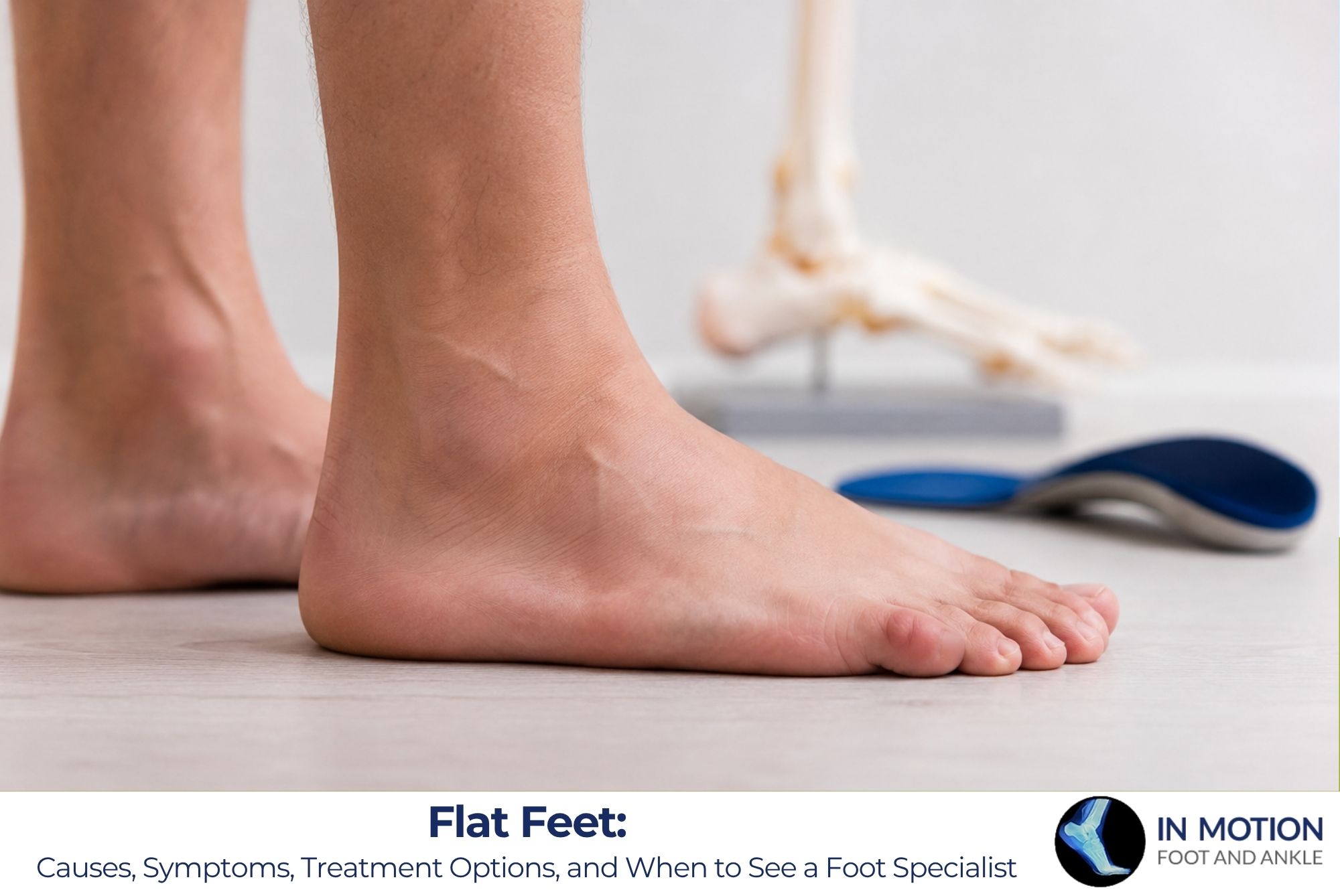
Flat feet, also known as fallen arches, occur when the arches on the inside of the feet collapse or fail to develop properly. As a result, the entire sole of the foot makes contact with the ground when standing.
Flat feet can affect one foot or both feet and may occur in children or adults. While many individuals with flat feet experience no symptoms, others may develop pain and alignment issues that affect daily activities.
Types of Flat Feet
Flexible Flat Feet
Flexible flat feet are the most common type. The arch appears when sitting or standing on tiptoes but disappears when standing normally. This condition often begins in childhood and may continue into adulthood.
Rigid Flat Feet
Rigid flat feet occur when the arch is absent regardless of whether the foot is bearing weight. This type is often associated with bone abnormalities or arthritis and can cause significant pain and limited mobility.
Adult-Acquired Flatfoot
Also known as posterior tibial tendon dysfunction (PTTD), this condition develops when the tendon supporting the arch becomes weakened or damaged. Adult-acquired flatfoot commonly affects middle-aged and older adults.
What Causes Flat Feet?
Several factors can contribute to the development of flat feet, including:
- Genetics and inherited foot structure
- Loose ligaments or hypermobility
- Injury to the foot or ankle
- Posterior tibial tendon dysfunction
- Arthritis
- Obesity
- Aging
- Diabetes
- Neurological disorders
- Pregnancy-related ligament changes
Children may naturally have flat feet during development, but persistent flat arches into adolescence or adulthood may require evaluation.
Common Symptoms of Flat Feet
Some individuals with flat feet experience no symptoms. However, others may notice:
- Foot pain, especially in the arch or heel
- Ankle pain and swelling
- Tired or achy feet after standing
- Pain that worsens with physical activity
- Difficulty walking or running
- Knee pain
- Hip pain
- Lower back discomfort
- Uneven shoe wear
- Frequent ankle sprains
Symptoms can worsen over time if left untreated.
How Flat Feet Affect Overall Health
The feet serve as the foundation of the body. When the arches collapse, the alignment of the ankles, knees, hips, and spine may be affected.
Flat feet can contribute to:
- Plantar fasciitis
- Achilles tendonitis
- Shin splints
- Bunions
- Hammer toes
- Knee instability
- Hip discomfort
- Chronic lower back pain
Addressing flat feet early may help prevent secondary musculoskeletal issues.
Diagnosing Flat Feet
A podiatrist can diagnose flat feet through a comprehensive evaluation that includes:
Physical Examination
Your doctor will assess:
- Foot structure
- Arch height
- Gait and walking pattern
- Range of motion
- Areas of pain and tenderness
Imaging Studies
Depending on your symptoms, imaging tests may include:
- X-rays
- Ultrasound
- MRI scans
- CT scans
These studies help identify tendon injuries, arthritis, bone abnormalities, and structural changes.
Treatment Options for Flat Feet
Treatment depends on the severity of symptoms and the underlying cause.
Custom Orthotics
Custom orthotic devices are designed to support the arch, improve alignment, and reduce strain on the feet and ankles.
Benefits include:
- Improved stability
- Better weight distribution
- Reduced pain
- Enhanced mobility
Supportive Footwear
Wearing properly fitted shoes with arch support and cushioning can significantly improve comfort and function.
Physical Therapy
Targeted exercises can strengthen the muscles and tendons that support the arch.
Common exercises include:
- Heel raises
- Toe curls
- Calf stretches
- Arch strengthening exercises
Anti-Inflammatory Medications
Over-the-counter or prescription medications may help reduce pain and inflammation.
Weight Management
Maintaining a healthy weight can decrease pressure on the feet and reduce symptom severity.
Bracing
For more advanced cases, ankle-foot braces may provide additional support and help slow progression.
Surgical Treatment
When conservative treatments fail, surgery may be recommended to:
- Repair damaged tendons
- Correct bone alignment
- Reconstruct the arch
- Relieve chronic pain
Surgical recommendations are based on individual needs and overall foot health.
Preventing Complications from Flat Feet
While not all cases of flat feet can be prevented, the following steps may reduce discomfort and prevent worsening symptoms:
- Wear supportive footwear
- Replace worn-out shoes regularly
- Use orthotic inserts when recommended
- Stretch regularly
- Maintain a healthy body weight
- Seek treatment for foot pain early
- Avoid prolonged standing when possible
When Should You See a Podiatrist?
Schedule an evaluation if you experience:
- Persistent foot or ankle pain
- Swelling along the inside of the ankle
- Difficulty walking or exercising
- Changes in foot shape
- Frequent falls or instability
- Progressive flattening of the arch
Early diagnosis and treatment can help prevent long-term complications and improve your mobility.
Frequently Asked Questions About Flat Feet
Are flat feet always a problem?
No. Many people with flat feet never experience pain or mobility issues. However, if symptoms develop, professional evaluation is recommended.
Can flat feet cause knee pain?
Yes. Flat feet can alter leg alignment, placing additional stress on the knees and potentially contributing to pain and instability.
Do children outgrow flat feet?
Many children naturally develop arches as they grow. Persistent flat feet or symptoms should be evaluated by a podiatrist.
Can flat feet lead to back pain?
Yes. Changes in posture and body alignment caused by flat feet can contribute to lower back discomfort.
Are custom orthotics effective for flat feet?
Custom orthotics are often highly effective in reducing pain, improving alignment, and supporting the arch.
Can exercise improve flat feet?
Certain strengthening and stretching exercises can help improve function, reduce pain, and support the foot’s natural structures.
Is surgery necessary for flat feet?
Most patients do not require surgery. Conservative treatments are often successful. Surgery is typically reserved for severe or progressive cases.
What shoes are best for flat feet?
Shoes with strong arch support, stability features, cushioning, and proper fit are generally recommended.
Can flat feet worsen with age?
Yes. Tendons and ligaments may weaken over time, causing arches to flatten further and symptoms to develop.
How do I know if I need treatment?
If flat feet cause pain, fatigue, instability, or interfere with daily activities, it is time to consult a foot and ankle specialist.
Trust In Motion Foot & Ankle for Expert Flat Foot Care
If you are experiencing foot pain, ankle discomfort, or mobility challenges related to flat feet, the team at In Motion Foot & Ankle is here to help. We provide comprehensive evaluations, advanced diagnostics, and personalized treatment plans designed to keep you moving comfortably and confidently.
Contact Information
In Motion Foot & Ankle
10425 Huffmeister Rd. Suite 260
Houston (Cypress), TX 77065
Phone: (281) 955-5500
Website: https://inmotionfootankle.com


