
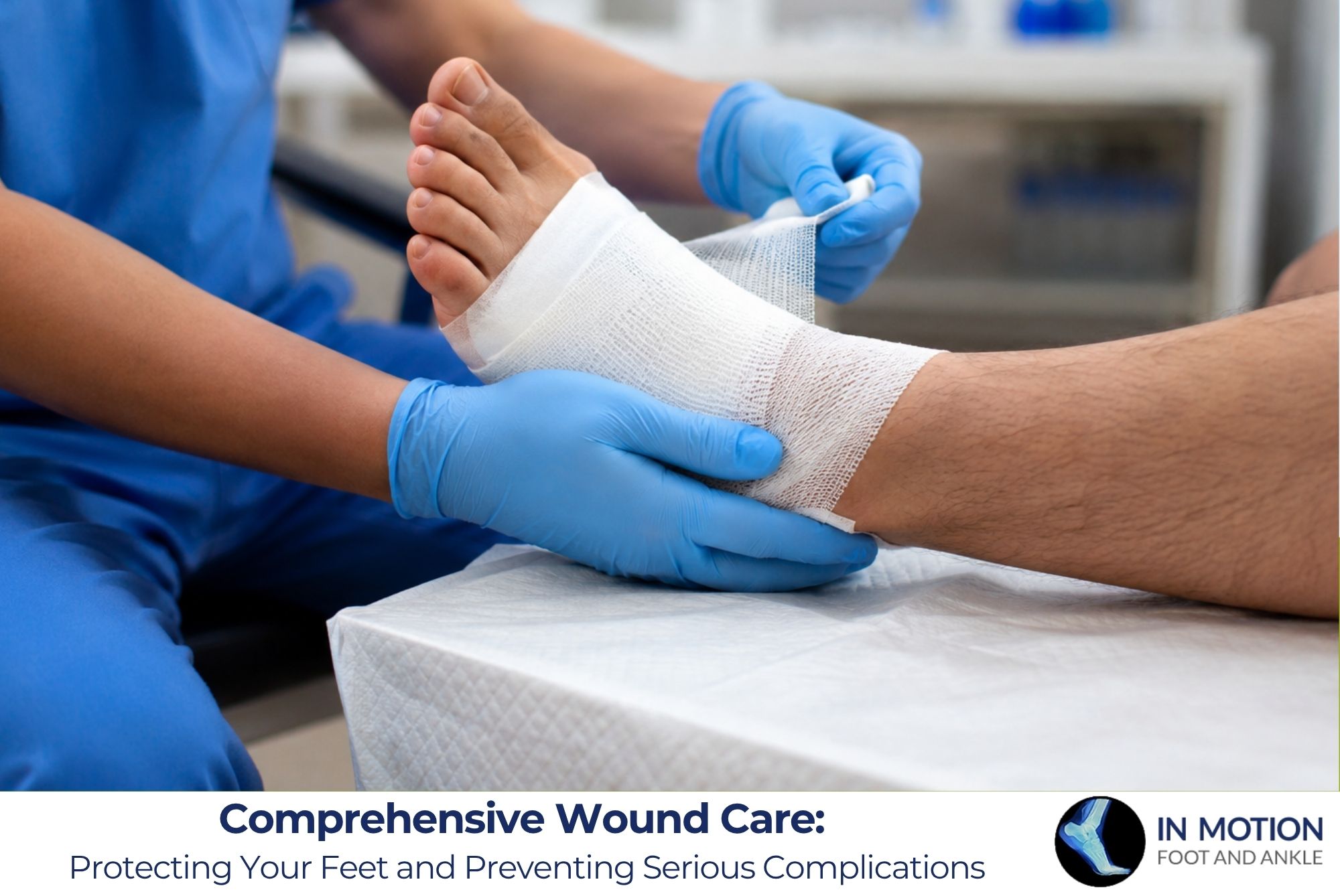
 Foot wounds may seem minor at first, but without proper care, they can quickly become serious health concerns. Whether caused by diabetes, poor circulation, injury, pressure, or infection, wounds on the feet and ankles require prompt evaluation and treatment to prevent complications. At In Motion Foot & Ankle, our experienced podiatric team specializes in advanced wound care treatments designed to promote healing, prevent infection, and help patients maintain their mobility and quality of life.
Understanding Foot and Ankle Wounds
A wound is any break in the skin or underlying tissue. While many wounds heal naturally, certain factors can interfere with the body’s ability to repair damaged tissue. Foot wounds are particularly concerning because they are subjected to constant pressure and may go unnoticed, especially in individuals with reduced sensation due to diabetes or neuropathy.
Common types of foot and ankle wounds include:
- Diabetic foot ulcers
- Pressure ulcers
- Venous ulcers
- Arterial ulcers
- Surgical wounds
- Traumatic injuries and lacerations
- Burns and abrasions
- Infected wounds
Early diagnosis and professional treatment are critical for preventing complications such as infection, tissue death, and even amputation.
Why Professional Wound Care Matters
Many patients attempt to manage wounds at home, but improper treatment can delay healing and increase the risk of infection. Professional wound care focuses on addressing the underlying cause of the wound while creating an environment that promotes optimal healing.
Benefits of professional wound care include:
- Faster healing times
- Reduced risk of infection
- Prevention of wound recurrence
- Improved circulation assessment
- Specialized wound dressings
- Advanced treatment options
- Limb preservation strategies
At In Motion Foot & Ankle, we develop personalized treatment plans tailored to each patient’s specific condition and healing needs.
Common Causes of Foot Wounds
Diabetes
Diabetes is one of the leading causes of chronic foot wounds. High blood sugar levels can damage nerves and blood vessels, reducing sensation and circulation in the feet. As a result, minor cuts or blisters may go unnoticed and develop into serious ulcers.
Poor Circulation
Conditions such as peripheral artery disease (PAD) can limit blood flow to the feet, making it difficult for wounds to heal properly.
Neuropathy
Loss of sensation caused by nerve damage can prevent individuals from recognizing injuries, allowing wounds to worsen before treatment is sought.
Pressure and Friction
Poorly fitting shoes, prolonged standing, and abnormal foot mechanics can create excessive pressure points that lead to skin breakdown and ulcers.
Trauma
Cuts, puncture wounds, burns, and injuries can result in open wounds that require professional medical attention.
Signs a Foot Wound Requires Immediate Medical Attention
Seek prompt evaluation if you notice:
- Redness spreading around the wound
- Swelling or warmth
- Drainage or pus
- Foul odor
- Fever or chills
- Increasing pain
- Blackened tissue
- Delayed healing
- Open sores lasting more than two weeks
Early intervention can prevent serious complications and improve treatment outcomes.
Advanced Wound Care Treatments
At In Motion Foot & Ankle, we utilize evidence-based wound care techniques to maximize healing.
Debridement
Debridement involves removing dead, damaged, or infected tissue to stimulate healthy healing and reduce bacterial growth.
Specialized Wound Dressings
Advanced dressings help maintain the ideal moisture balance while protecting the wound from contamination.
Infection Management
If infection is present, treatment may include antibiotics, wound cleansing, and close monitoring.
Offloading Techniques
Reducing pressure on the wound is often essential for healing. This may involve:
- Specialized footwear
- Walking boots
- Orthotics
- Padding techniques
Diabetic Foot Care
Comprehensive diabetic foot evaluations help identify risk factors before wounds develop and support long-term foot health.
Circulation Assessment
Evaluating blood flow can help determine whether vascular intervention may be necessary to support healing.
Preventing Foot Wounds
Preventive care is especially important for individuals with diabetes, circulation problems, or neuropathy.
Helpful prevention strategies include:
- Inspecting feet daily
- Wearing properly fitted footwear
- Keeping feet clean and moisturized
- Managing blood sugar levels
- Avoiding walking barefoot
- Trimming toenails carefully
- Seeking prompt treatment for cuts or blisters
- Scheduling regular podiatric examinations
The Importance of Early Treatment
The sooner a wound is evaluated, the better the chances of successful healing. Delaying treatment can lead to deeper infections, hospitalization, and increased risk of limb-threatening complications.
If you notice any foot wound, ulcer, or sore that is not healing properly, seeking professional podiatric care can make all the difference in preserving your health and mobility.
Frequently Asked Questions About Wound Care
What is wound care?
Wound care involves the assessment, treatment, and management of wounds to promote healing and prevent infection or other complications.
Why do diabetic patients develop foot ulcers?
Diabetes can cause nerve damage and poor circulation, making it difficult to feel injuries and slowing the healing process.
How long does it take for a foot wound to heal?
Healing times vary depending on the wound’s size, location, cause, overall health, and circulation. Some wounds heal within weeks, while chronic wounds may require ongoing treatment.
What happens if a foot ulcer is left untreated?
Untreated ulcers can become infected, spread to deeper tissues, damage bone, and potentially lead to amputation.
What is debridement?
Debridement is the removal of dead or infected tissue from a wound to encourage healthy tissue growth and healing.
Can foot wounds heal on their own?
Some minor wounds may heal independently, but wounds associated with diabetes, poor circulation, or infection often require professional care.
How can I tell if a wound is infected?
Common signs include redness, swelling, warmth, pain, drainage, foul odor, and delayed healing.
Should I cover a wound or leave it open?
Most wounds heal better when protected with appropriate dressings that maintain a moist healing environment.
What are diabetic foot ulcers?
Diabetic foot ulcers are open sores that develop on the feet of individuals with diabetes, often due to pressure, neuropathy, and poor circulation.
How often should wound dressings be changed?
The frequency depends on the type of wound, dressing used, and amount of drainage. Your podiatrist will provide specific instructions.
Can poor circulation affect wound healing?
Yes. Adequate blood flow is essential for delivering oxygen and nutrients needed for tissue repair.
When should I see a podiatrist for a foot wound?
You should seek evaluation immediately if a wound is not healing, shows signs of infection, or if you have diabetes, neuropathy, or circulation problems.
Can specialized footwear help prevent wounds?
Yes. Proper footwear can reduce pressure points, friction, and injury risk, particularly for diabetic patients.
Are chronic wounds treatable?
Yes. Advanced wound care treatments can often successfully manage and heal chronic wounds when addressed promptly.
How can I reduce my risk of developing foot ulcers?
Regular foot inspections, blood sugar management, proper footwear, and routine podiatric care significantly reduce the risk of ulcers.
Contact In Motion Foot & Ankle
In Motion Foot & Ankle
10425 Huffmeister Rd. Suite 260
Houston (Cypress), TX 77065
Phone: (281) 955-5500
Website: https://inmotionfootankle.com


