
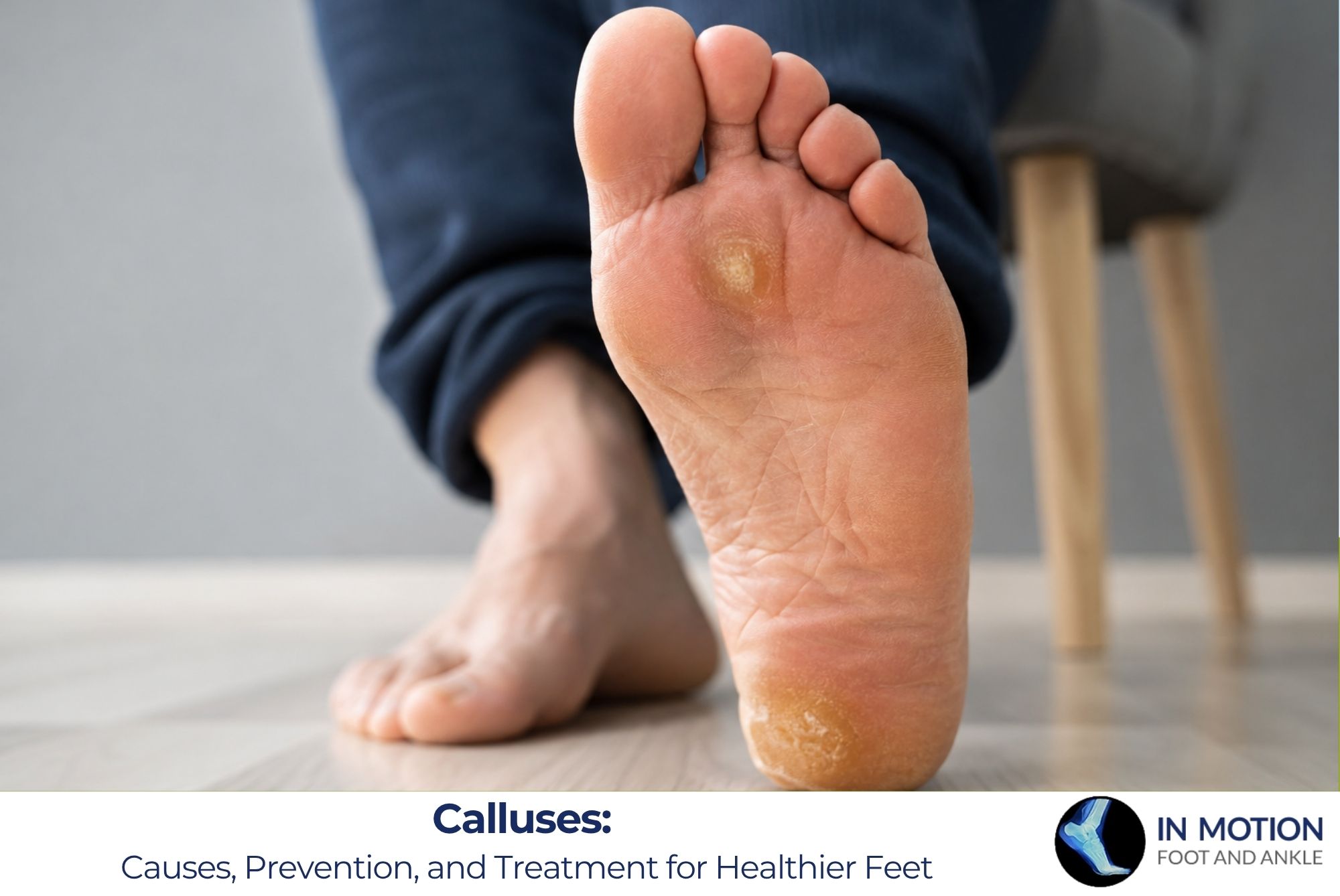
 Your feet work hard every day, supporting your body through thousands of steps, workouts, and daily activities. Over time, repeated pressure and friction can lead to the development of calluses—thickened areas of skin that form as the body’s natural defense mechanism. While calluses are often harmless, they can become uncomfortable, painful, and even lead to more serious foot problems if left untreated.
At In Motion Foot & Ankle, we help patients throughout Houston and Cypress, Texas, maintain healthy, pain-free feet. Understanding what causes calluses and how to properly manage them can help you avoid complications and keep your feet feeling their best.
What Are Calluses?
Calluses are thick, hardened layers of skin that develop when the skin experiences repeated pressure, friction, or irritation. Unlike blisters, which form as fluid-filled pockets, calluses develop gradually as the skin thickens to protect itself.
Calluses commonly appear on:
- The balls of the feet
- Heels
- Sides of the feet
- Toes
- Areas exposed to repeated rubbing from footwear
While calluses are generally not dangerous, they can become painful, crack, or contribute to walking difficulties if they become excessively thick.
What Causes Calluses?
Several factors can contribute to callus formation, including:
Poorly Fitting Footwear
Shoes that are too tight, too loose, or lack adequate support can create excessive friction and pressure on specific areas of the foot.
High-Impact Activities
Running, walking long distances, sports participation, and occupations requiring extended standing can increase the likelihood of developing calluses.
Foot Structure and Biomechanics
Certain foot conditions may place abnormal pressure on parts of the foot, including:
- Flat feet
- High arches
- Bunions
- Hammertoes
- Gait abnormalities
Walking Barefoot
Walking without shoes regularly can increase friction against the skin, leading to callus development.
Obesity
Excess body weight places additional pressure on the feet, increasing the risk of callus formation.
Are Calluses Dangerous?
Most calluses are not dangerous. However, they can become problematic if they:
- Cause pain while walking
- Develop deep cracks or fissures
- Become inflamed or infected
- Alter your walking pattern
- Occur in individuals with diabetes or circulation issues
People with diabetes should never attempt to remove calluses on their own due to the increased risk of infection and complications.
Signs It’s Time to See a Foot Specialist
You should schedule an evaluation if you experience:
- Persistent foot pain
- Thick, painful calluses
- Redness or swelling around the area
- Bleeding or cracked skin
- Difficulty walking
- Recurring calluses despite home care
- Diabetes or peripheral neuropathy
A podiatrist can determine whether the callus is simply due to friction or if an underlying foot condition is contributing to the problem.
How Are Calluses Treated?
Professional Debridement
One of the most effective treatments is professional callus removal, also known as debridement. This procedure safely reduces thickened skin without causing injury.
Custom Orthotics
Custom orthotics help redistribute pressure across the foot, reducing friction and preventing future callus formation.
Footwear Recommendations
Properly fitted shoes with adequate cushioning and support can significantly reduce callus recurrence.
Moisturizing Treatments
Regular moisturizing helps prevent dryness and cracking associated with thick callused skin.
Treatment of Underlying Foot Conditions
Conditions such as bunions, hammertoes, and gait abnormalities may require additional treatment to eliminate the source of pressure.
Preventing Calluses
The best way to manage calluses is prevention. Consider the following tips:
Wear Proper Footwear
Choose shoes that:
- Fit properly
- Provide arch support
- Have sufficient toe room
- Offer adequate cushioning
Use Protective Padding
Pads or inserts can reduce pressure on high-friction areas.
Moisturize Daily
Keeping your skin hydrated helps prevent excessive thickening and cracking.
Inspect Your Feet Regularly
Regular foot inspections can help identify developing calluses before they become problematic.
Address Foot Pain Early
Ignoring foot discomfort often leads to worsening pressure points and larger calluses.
Why Professional Care Matters
Many people attempt to remove calluses at home using razors, sharp tools, or over-the-counter products. These methods can increase the risk of cuts, infections, and complications—especially for individuals with diabetes or poor circulation.
Professional evaluation ensures safe treatment while addressing any underlying biomechanical issues that may be causing recurring calluses.
At In Motion Foot & Ankle, our team provides comprehensive foot care solutions tailored to your unique needs. We focus on relieving discomfort, preventing recurrence, and helping patients maintain long-term foot health.
Frequently Asked Questions About Calluses
What is the difference between a corn and a callus?
A callus is a broad area of thickened skin caused by friction or pressure, while a corn is a smaller, more concentrated area of thickened skin that often develops on or between the toes.
Can calluses go away on their own?
If the source of friction or pressure is removed, mild calluses may gradually decrease. However, persistent calluses often require professional treatment.
Are calluses painful?
Many calluses are painless, but thicker calluses can become uncomfortable or painful, especially when pressure is applied during walking or standing.
Can I cut off a callus myself?
No. Cutting calluses yourself can lead to injury, infection, and complications. Professional treatment is the safest option.
What causes recurring calluses?
Recurring calluses often indicate an underlying biomechanical issue such as improper footwear, abnormal gait patterns, bunions, hammertoes, or foot deformities.
Is it safe to use over-the-counter callus removers?
Some products contain strong acids that can damage healthy skin. Individuals with diabetes should avoid these products unless specifically directed by a healthcare provider.
Can diabetes make calluses more dangerous?
Yes. People with diabetes have a higher risk of infection and delayed healing. Even small foot injuries can become serious if not properly treated.
Do custom orthotics help prevent calluses?
Yes. Custom orthotics redistribute pressure across the foot, reducing friction and helping prevent recurrent calluses.
How often should calluses be professionally treated?
The frequency varies depending on the severity of the callus and underlying causes. Your podiatrist can recommend an appropriate treatment schedule.
When should I see a podiatrist for a callus?
You should seek professional care if a callus becomes painful, thick, cracked, inflamed, or repeatedly returns despite home care efforts.
Contact In Motion Foot & Ankle
In Motion Foot & Ankle
10425 Huffmeister Rd. Suite 260
Houston (Cypress), TX 77065
Phone: (281) 955-5500
Website: https://inmotionfootankle.com


