
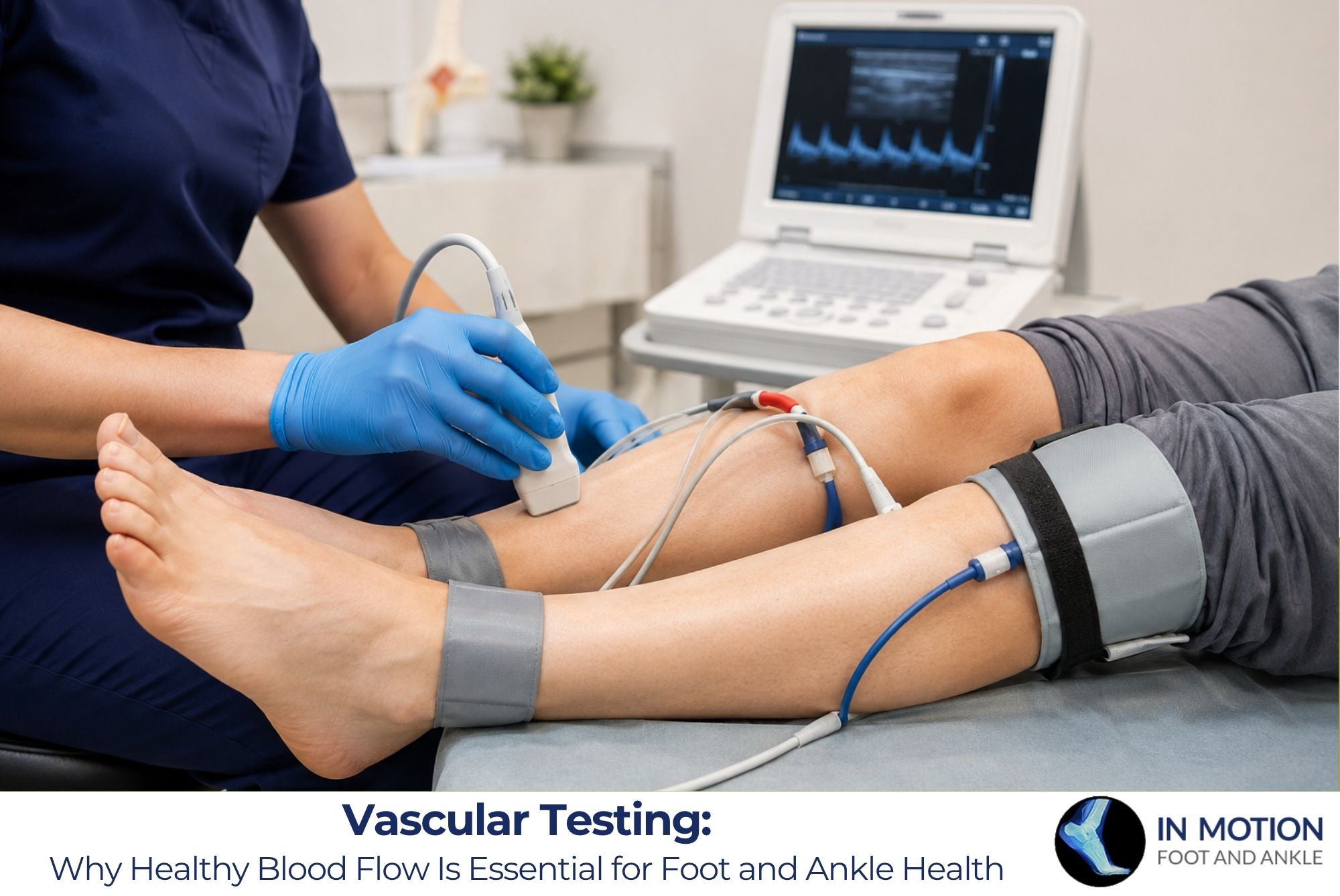
 When most people think about foot and ankle problems, they often associate them with bones, joints, muscles, or tendons. However, one of the most important factors affecting lower extremity health is often overlooked: blood circulation. Proper blood flow is essential for delivering oxygen and nutrients to tissues, promoting healing, and maintaining overall foot health. When circulation becomes compromised, it can lead to serious complications, including chronic pain, wounds that won’t heal, infections, and even limb-threatening conditions.
At In Motion Foot & Ankle, we utilize advanced vascular testing to evaluate circulation in the feet and lower legs, helping identify underlying vascular issues before they become severe. Early detection and treatment can significantly improve outcomes and protect your long-term health.
What Is Vascular Testing?
Vascular testing refers to a series of non-invasive diagnostic procedures used to evaluate blood flow through arteries and veins. These tests help determine whether blood is circulating properly to the feet, ankles, and lower extremities.
Because the feet are the farthest point from the heart, they are often among the first places where circulation problems become noticeable. Vascular testing provides valuable information that helps podiatrists diagnose conditions affecting blood vessels and circulation.
Why Is Good Circulation Important for Foot Health?
Healthy circulation plays a critical role in maintaining strong, healthy feet. Blood delivers oxygen and nutrients to tissues while removing waste products. When circulation is impaired, tissues may not receive what they need to heal and function properly.
Poor circulation can contribute to:
- Slow wound healing
- Chronic foot pain
- Numbness or tingling
- Skin discoloration
- Cold feet
- Leg cramping
- Increased risk of infection
- Tissue damage
- Ulcer formation
- Amputation risk in severe cases
Early identification through vascular testing can help prevent these complications and support healthier outcomes.
Conditions That May Require Vascular Testing
Peripheral Artery Disease (PAD)
Peripheral Artery Disease occurs when arteries become narrowed or blocked due to plaque buildup. This restricts blood flow to the legs and feet.
Symptoms may include:
- Leg pain while walking
- Cramping in the calves
- Cold feet
- Slow-healing wounds
- Changes in skin color
- Hair loss on the legs
- Weak pulses
PAD can increase the risk of heart attack and stroke if left untreated.
Diabetes-Related Circulation Problems
People with diabetes are at higher risk for vascular disease and poor circulation. Reduced blood flow can make diabetic foot ulcers more difficult to heal and increase the risk of infection.
Regular vascular testing can help monitor circulation and detect problems before serious complications develop.
Venous Insufficiency
Venous insufficiency occurs when veins struggle to return blood to the heart. This can lead to:
- Swelling
- Varicose veins
- Skin changes
- Leg fatigue
- Venous ulcers
Testing helps determine the severity of the condition and guide treatment recommendations.
Non-Healing Wounds
If a wound on the foot or ankle is slow to heal, vascular testing can help determine whether inadequate circulation is contributing to the problem.
Chronic Foot and Leg Pain
Pain may sometimes stem from circulation issues rather than orthopedic conditions. Vascular testing helps identify underlying vascular causes that may otherwise go unnoticed.
Types of Vascular Testing
Several safe and painless diagnostic tools may be used to evaluate circulation.
Ankle-Brachial Index (ABI)
The ABI compares blood pressure measurements in the ankles and arms. Significant differences may indicate arterial blockages or narrowing.
Doppler Ultrasound
This non-invasive imaging technique uses sound waves to evaluate blood flow through arteries and veins. It helps identify areas of reduced circulation or blockages.
Pulse Volume Recording (PVR)
PVR measures changes in blood volume within the legs and feet during each heartbeat, providing valuable information about circulation quality.
Toe Pressure Testing
This specialized test evaluates circulation in the toes and is particularly useful for patients with diabetes or advanced vascular disease.
Segmental Pressure Testing
Blood pressure is measured at various locations throughout the legs to identify where circulation may be impaired.
What Happens During a Vascular Test?
Most vascular tests are simple, painless, and performed in an outpatient setting.
During testing, a healthcare provider may:
- Measure blood pressure in different areas of the arms and legs.
- Use ultrasound equipment to assess blood flow.
- Apply sensors or cuffs to evaluate circulation patterns.
- Record blood flow data for analysis.
The procedures typically require little to no preparation and can often be completed within a short office visit.
Benefits of Early Vascular Testing
Early diagnosis of circulation problems offers numerous advantages:
Prevent Serious Complications
Detecting circulation issues early can reduce the risk of ulcers, infections, and tissue damage.
Improve Treatment Outcomes
Earlier intervention often leads to better treatment success and improved healing.
Protect Limb Health
Vascular testing helps identify patients at risk for severe complications that could threaten foot or limb preservation.
Support Overall Health
Circulation problems in the feet may indicate broader cardiovascular concerns that warrant further medical evaluation.
Peace of Mind
Knowing the status of your circulation allows for proactive care and informed healthcare decisions.
Who Should Consider Vascular Testing?
You may benefit from vascular testing if you:
- Have diabetes
- Smoke or have a history of smoking
- Experience leg pain while walking
- Have numbness or tingling in your feet
- Have non-healing wounds
- Notice cold feet or color changes
- Have high blood pressure
- Have elevated cholesterol
- Have a family history of vascular disease
- Are over age 50 and have cardiovascular risk factors
Routine evaluation can help identify concerns before symptoms become severe.
The Connection Between Vascular Health and Diabetic Foot Care
Diabetes significantly increases the risk of vascular disease. Poor circulation combined with diabetic neuropathy can create a dangerous combination that increases the likelihood of ulcers and infections.
Vascular testing serves as an important component of comprehensive diabetic foot care by helping identify circulation issues that could interfere with healing and increase complications.
Trust In Motion Foot & Ankle for Advanced Vascular Evaluation
At In Motion Foot & Ankle, our team is committed to providing comprehensive foot and ankle care that addresses the underlying causes of your symptoms. Through advanced vascular testing and personalized treatment recommendations, we help patients protect their mobility, improve circulation, and maintain healthier feet.
If you’re experiencing symptoms of poor circulation or have risk factors for vascular disease, schedule an evaluation today. Early detection can make all the difference in preserving your foot health and overall well-being.
Frequently Asked Questions (Q&A)
What is vascular testing?
Vascular testing is a group of non-invasive diagnostic procedures used to evaluate blood flow through the arteries and veins of the legs, ankles, and feet.
Is vascular testing painful?
No. Most vascular tests are painless and involve blood pressure measurements, ultrasound technology, or external sensors placed on the skin.
Why would my podiatrist recommend vascular testing?
Your podiatrist may recommend vascular testing if you have symptoms of poor circulation, diabetes, slow-healing wounds, leg pain, or risk factors for vascular disease.
How long does vascular testing take?
Many vascular studies can be completed within 30 to 60 minutes, depending on the type of testing performed.
What conditions can vascular testing detect?
Vascular testing can help identify Peripheral Artery Disease (PAD), venous insufficiency, arterial blockages, circulation deficiencies, and other vascular disorders.
Can vascular testing help diabetic patients?
Yes. Vascular testing is particularly important for diabetic patients because poor circulation can increase the risk of ulcers, infections, and delayed wound healing.
What are signs of poor circulation in the feet?
Common signs include cold feet, numbness, tingling, discoloration, cramping, slow-healing wounds, and pain during walking.
Is vascular testing covered by insurance?
Many insurance plans cover medically necessary vascular testing. Coverage varies by provider and policy.
Can poor circulation cause foot pain?
Yes. Reduced blood flow can deprive tissues of oxygen, resulting in discomfort, cramping, and pain, particularly during activity.
When should I schedule vascular testing?
You should schedule an evaluation if you experience symptoms of poor circulation, have diabetes, develop a non-healing wound, or possess significant cardiovascular risk factors.
Contact In Motion Foot & Ankle
In Motion Foot & Ankle
Houston (Cypress), TX 77065
Phone: (281) 955-5500
Website: https://inmotionfootankle.com


